As if the force of a black hole sucks her backwards into its depths, I feel an energetic tug on my belly as her hind legs shift backwards and downwards, sinking her life-force into the ground, giving her front end the lightness it needs for her to spin like the equine ballerina she is. I stand there in what feels like a state of helplessness, as she turns and shakes her head with a forcefulness that, in my ego-driven brain, feels like the ultimate dismissal. All I want to do is put a halter on my horse. In the meantime, while she is not “running” around me, she is quickening up her energy, her pace, and doing all she can to not be near me. Something is happening that I am not the feel-good place for her.
Something is wrong here, and of course, I know better than to listen to the story my ego is creating. I’ve done “something wrong”. I’ve “messed this up.” And while it has been ages since I have had this experience of not being put on a halter on and the horse evading me, but what it does tell me is that something in me is off. It’s not that I’ve done something wrong; it’s that I am not connected to myself and my horse’s experience, somehow, in this moment. I’m off.
I start “doing” what I have learned to do in these moments.
It gets worse. She speeds up. She runs more.
And then it hits me. I also didn’t really turn off the pressure for her, and by “doing more,” I added more. I was still adding pressure. Perhaps it felt like to me that I wasn’t adding pressure, not only physical, but also emotional pressure, but to her it did. That’s what matters. I wasn’t seeing what was and was not pressure, from her perspective.
Instead, my energy would then go up into my head, attempting to “solve” the issue, in a cognitive and heady dissociative way, and in the meantime, missing what she needs, and ignoring in the moment, the message she is telling me. “You misattuned to me, way earlier.”
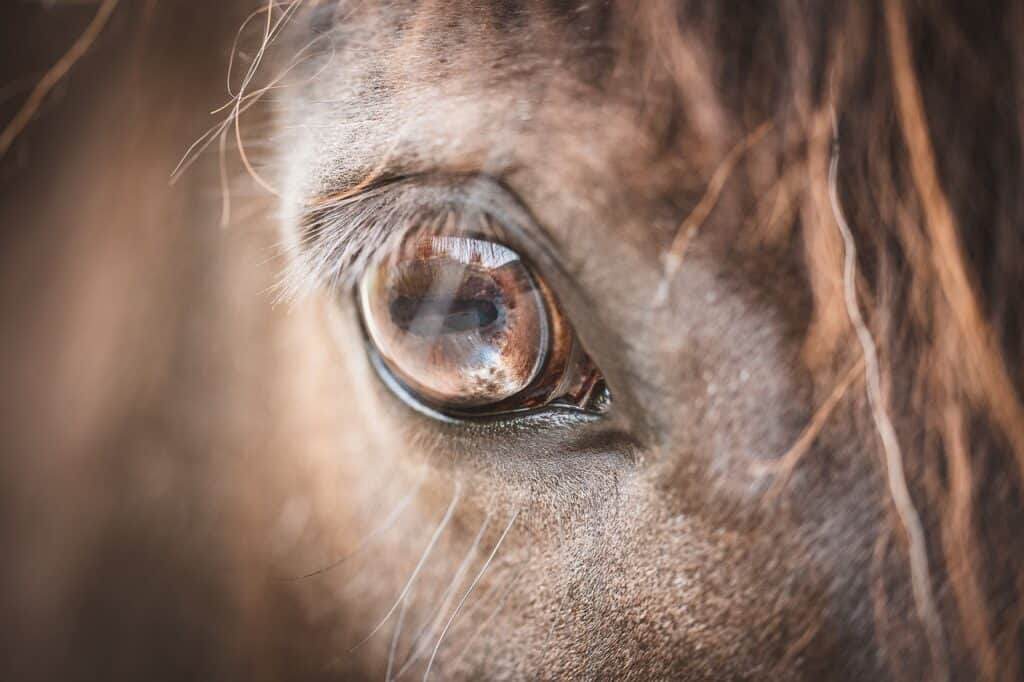
The fact is, she started to not feel good way before I got there with the halter. I missed it. Instead, I had blasted past what was intolerable for her much earlier, when she brought her head up and got very still, as soon as I got to the gate. Vigilant. Even though I believed that I was coming in softly, even though I felt like I was breathing and present, I was still focusing on what helped me to feel calm, that I missed what she needed in order to feel okay with me, and for her to be calm.
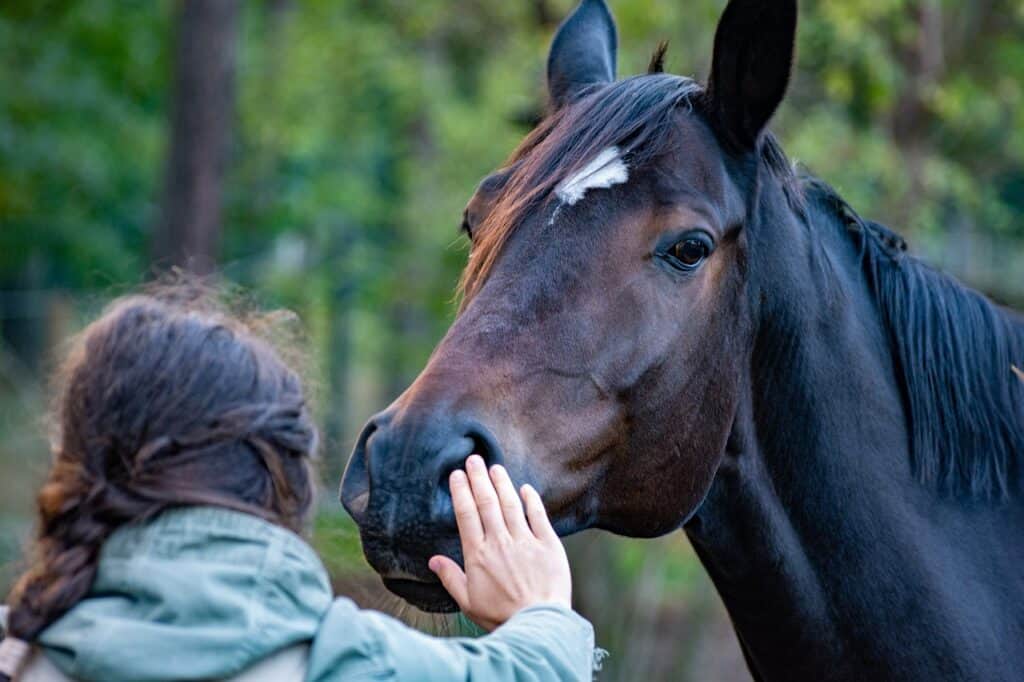
It wasn’t until I turned completely around, walked back a few feet, that she finally settled in, moved to me, and shifted her nose into the halter with a willingness, as she has for years. “You get it now.”
I write about the tolerance for calm a lot. To have our own tolerance for calm, as humans, to me, is key to being able to meet life on life’s terms. We can only learn how to manage what life throws at us when we also can embody that we have a way to get ourselves out of distress, internally, and can depend on it when we need it the most. That said, what I was reminded of, in this moment, is that even if we are calm in the moment, which is of paramount importance, it is also important that we make sure we are aware and fully attuned to whether our clients, our animal partners, our loved ones are supported by us in also being able to be calm in the moment. Are we adding unnecessary energy, noise, or charge to make it difficult for them to also be with themselves and us? Did we even notice these subtle shifts and changes, or did we blast past it in some attempt to “do” something?
Our narratives about what is happening get in the way. I knew better than to think it was personal that Annie was running away in response to me. I knew, of course, that I was contributing to it, but being present with the situation also meant noticing the ever-so-subtle clues from her that she felt unsafe. For some horses, just as with people, when they get out of their window, it might be dramatic, big, and filled with fire, but for others, it is ever so much more subtle. The energy change, the “feel” in the room, the tone of voice, the body postures, the breath, “did you notice that?” and if we don’t, well, there’s that continued mis-attunement. It still amazes me how often they will give us chances to get it right, even when we might miss it over and over.